Justice Scalia Creates a “Parchment Guarantee” in Lujan
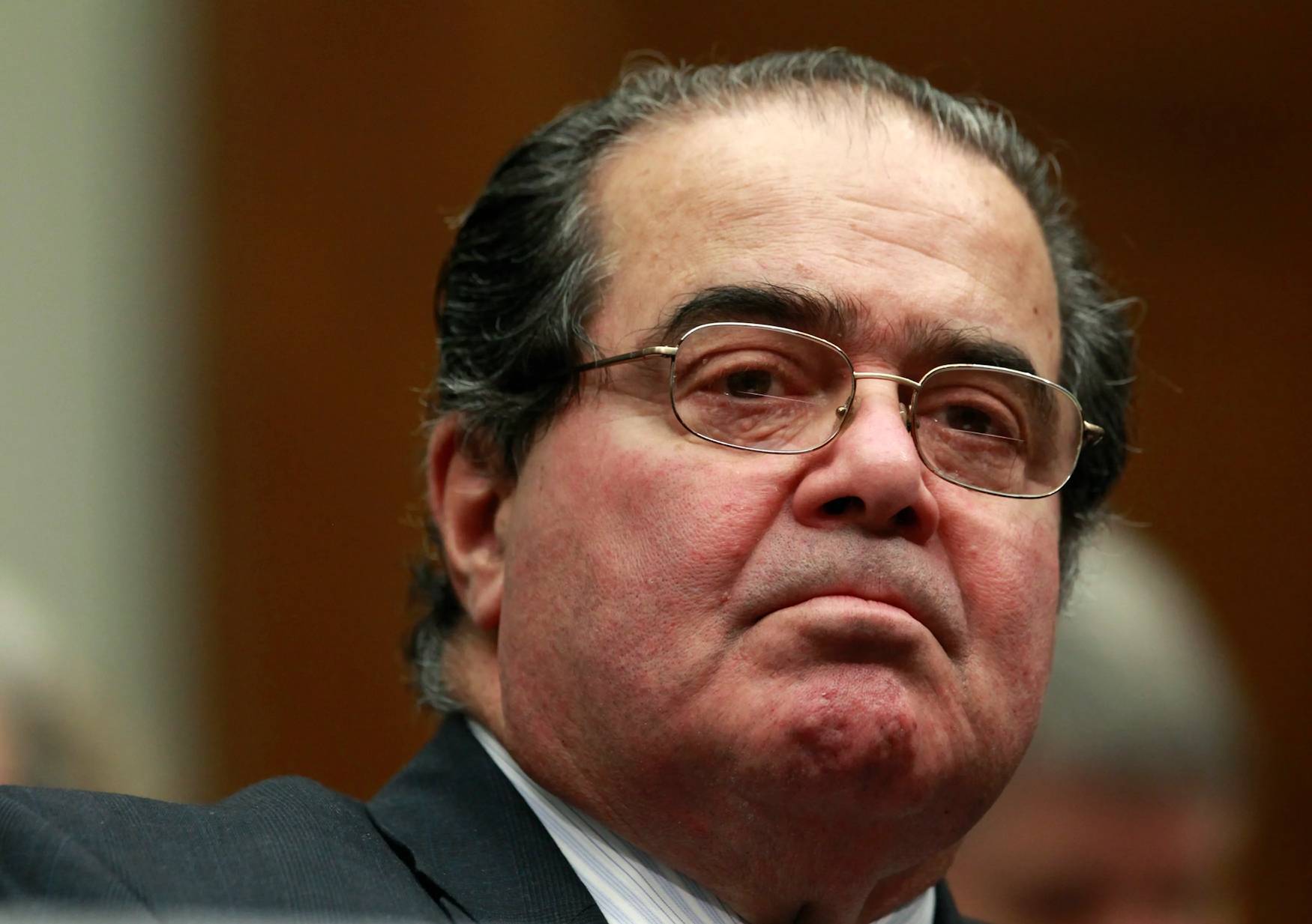
In Lujan v. Defenders of Wildlife, Justice Antonin Scalia said it’s up to politics to make sure common interests are served. By using social influence to make sure government employees enforce previously-passed laws (“the impact on plaintiff is plainly undifferentiated and common to all members of the public… business of… the political branches”).
The incentive to enforce the Endangered Species Act was already legislated by Congress (a “political branch”) in 1978 (16 USC 1540 subsection g). Scalia said after that, it was still dependent on the political process influencing the executive branch through “the chain of dependence”, to make sure “the executive branch” actually enforces the law.
But the ballot in the next Presidential election did not contain any line about a particular river or elephant species in Sri Lanka, or any way to differentiate this interest. The 1992 election was about “it’s the economy stupid” and “100 days to healthcare”. The election establishing the interest of individuals in environmental enforcement took place years earlier, when electing legislative representatives.
So far as I can tell, Lujan plaintiff Amy Skilbred lived in Alaska. The ballot provided to communicate her preferences in the 1992 election included the names of about a half dozen President candidates, and space for write-ins. But included zero text or space for specific legislation or environmental issues.
I remember the 1994 election being about Newt Gingrich’s “Contract with America”. And an anecdote of a farmer in California who couldn’t use his land because of an endangered kangaroo rat. But I don’t recall being told by anyone in 1992, that my vote could affect the fate of the nile crocodile. I need people with more knowledge and information than me, as delegates to represent my interests in these things. But Scalia basically said it’s impossible to legislate protection of any interest that 51% of people aren’t avid experts on.
Lujan conflates between interest, knowledge, information, and incentive. Someone who has an interest that a law be enforced, and someone who has knowledge, information, and incentive to enforce it, are two different things. The incentive to enforce it must be conveyed from the person who has an interest, to the person who has knowledge and information. That can’t be done by politics, because neither my brain nor my ballot, have space for everything I have an interest in or that could affect me. That’s why I join a collective.
So that’s why my representatives, on my behalf, created the citizen-enforcement provision in Lujan. Whether this is good or bad policy, is irrelevant. You can’t have any policy, without an enforcement process.
It doesn’t matter if you have an interest in some outcome, if you have an unconscious interest. I have an interest that a comet not hit Earth. But I shouldn’t have to be aware of every space rock, to vote on which one NASA should pay attention to. I need to be able to delegate to them to take care of it — and delegate somebody to sue on my behalf if they aren’t (standing in for me like a juror) — without my having to be aware. I need someone with differentiated knowledge and information, not someone with a differentiated stake in the outcome. I need some way to give that person an incentive.
Knowledge, information, and benefit are in three different places. I have an undifferentiated interest that the law be enforced (such as on meteor-prevention). But I have differentiated knowledge as to what should be enforced, and differentiated information on where it needs to be enforced. And so I have differentiated ability to enforce my interest by creating an incentive to enforce it, since the “chain of dependence” doesn’t do it using my election ballot.
The “powers” to enforce it, and the information and incentive, are all in “separate” places.
Regardless of Scalia inventing what the text of the Constitution says, Scalia both a) really believes social influence works better than courts, and b) panders to the vanity of “the people” with a mirage of control, to slip in policies he likes. Where he imagines “the people” want his wise policies.
Scalia imagines he is part of this telepathic transmission. And is not really a fan of the actual parchment. (Like Gorsuch in City of Grants Pass prefers “collective wisdom” over federal law.)
And it’s likely that Scalia simply thinks environmental laws are bad policy, because the tradeoff decisions created by citizen lawsuits are unprofitable. But also thinks that it’s up to federal judges to protect business rights against such bad legislated policies, using sophistry. Scalia sees himself, rather than the Lujan plaintiffs, as the conscious delegate acting on behalf of the unconscious masses.
Such is the magical thinking inside the social world of the judge-ape.
Scalia thinks voters in direct democracy are both wiser and more efficient than petitioners enforcing laws in court. Like Powell in Imbler, Scalia believes this based on a hallucination of rational social influence, not based on any rigorous evidence or debate.
But it’s dubious that people standing in the street shouting, forming shouting factions, and bombarding millions of distant strangers with esoteric propaganda every day, is more efficient than simply having standing in court.
When Scalia gives you standing to stand in the street shouting, it’s the perfect example of legislation being turned into what Scalia called “a parchment guarantee”. As I found out when I was arrested for posting “Cops2Prison.org” fliers. And judges actively participated in falsifying that record, by adding lies which even government employees themselves were too timid to tell.
This was Scalia’s plan all along, to turn legislation into worthless parchment. If he doesn’t think the policy or process is necessary. While preaching about abstractions as distractions.
Leave a Reply