The Communist Mind of Justice Clarence Thomas
People complain that Clarence Thomas changes law, to do things you don’t like. But you never dispute the underlying beliefs, that make Thomas think he’s doing the right thing.
Justices tell you their crazy economic beliefs right in their opinions, not citing any legislation. But their detractors seem to ignore feelgood interjections like “trust the people” as harmless, rather than being the cause of the problem. Probably because you share many of these same disastrous economic assumptions yourselves. So you argue with Thomas’s twisted citations of legislation, but not with the crazy ideas that motivate what he’s doing.
You might say something like (*in Hunter v. United States) “given that we did create appeals courts, common law doesn’t stop them exercising jurisdiction if they want to”. But this doesn’t address why Thomas would want to say common law blocks legislation. Nobody ever addresses: Why would Thomas want to argue that common law stops us from creating new courts? Why does Thomas think courts and law don’t work, and why does he not want them? What is Thomas wrong about?
(*People don’t see the error which cases are really being decided based on. Thomas is never even forced to answer the right questions. So many people share Thomas’s assumptions, that they never even bring cases and arguments that would force him to do the right thing.)
So I will to explain to you, the underlying errors that lead to Justice Thomas’s decisions.
A few years back I watched some trials where people got life without parole for crimes that didn’t happen. These crimes existed only in imagination promoted by government. Convicting the innocent was not an accident, government employees knew they were lying.
So I started researching: Why do justices like Clarence Thomas impose a system where people get life in prison based on lies?
(*Why do Supreme Court justices support local-court lying to let cops do whatever they want, to give people life in prison for crimes that didn’t even happen?)
I traced it all back to one thing: The tendency of the human brain to imagine two different people see the same thing.
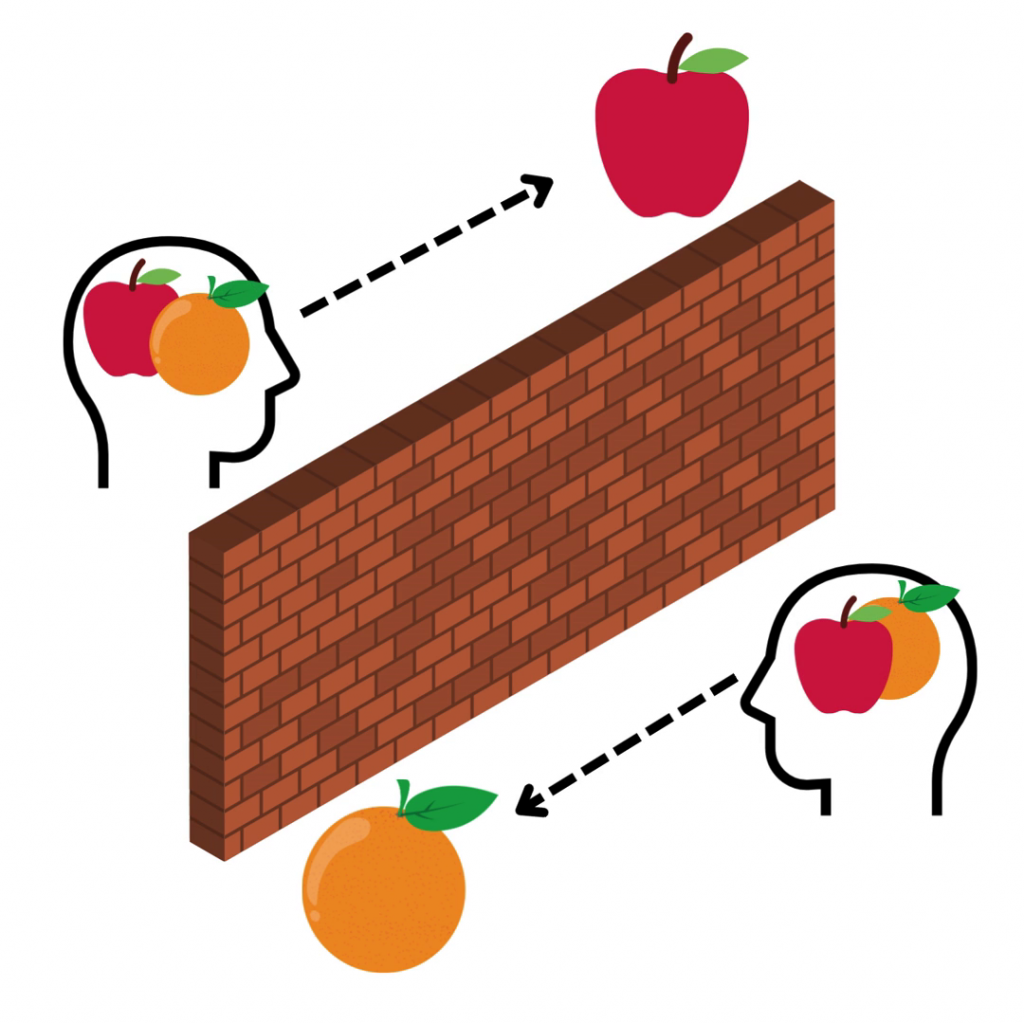
(*This primitive assumption is built into the human brain, and was only made inaccurate by the expansion of society from groups of 10 people to billions. Which strangers it is more useful to not harm, than people’s instincts would tell them.)
When you begin by incorrectly imagining different people share a common vantage point more than they do – when you imagine that information is less fragmented than it is, which was sort of true in very primitive societies — this leads logically to a cascade of incorrect assumptions, which Supreme Court justices force into law.
This mirage that there’s a social pipeline of perfect information that does the same things as laws and courts for cheaper — What Justice Gorsuch calls a “chain of dependence” in Trump v. Slaughter — is a chain of logical errors.
Incorrect assumptions about what voters know, leads to incorrect assumptions about how government and business can be regulated to make good decisions. This leads to incorrect assumptions about the value added by courts and defendants, which then leads to the misguided policies legislated over law in Supreme Court decisions.
(
Cascade of Logical Errors from Initial “Collective” Hallucination
- Voters can see everything, and know what government is doing and should do.
-> - This collective knowledge can directly supervise government activity through social influence and votes.
-> - The quality of executive-branch decisions resulting from this regulation is better and less corrupted than courts and law, basically for free.
-> - Therefore, courts, defendants, and appeals don’t add any value to social decisions to harm people, only corrupt the decisions and add costs.
->
5.These incorrect beliefs are legislated into policy with case decisions that minimize criminal process, and protect harms to individuals against courts.
)
The Collective Mind is All-Knowing
When you begin by assuming different people see the same things, this leads to assuming voters already know all the information that courts are supposed to bring in, starting with laws themselves.
The first error in the cascade, is vaguely conflating the preferences of voters and government officials, and those written in laws, as all being the same thing.
1) Voters generally know what police should be doing in different situations, without it being written down anywhere.
2) What social groups want done to murderers and what the law says to do, will generally be the same thing.
Obvious questions should show the flaws in this:
If people inherently know what law should do, then why do we need to write it out? Do we really not need legislators to debate laws, and history to test them, to find out what laws are beneficial? Can the average person see in his mind, all that history and debate?
Justices don’t see the flaws because they never openly state their beliefs as a complete logical order. Justices vaguely imply their assumptions and logic in the outcomes they prefer. Then find a way to mash those results over law at every opportunity using sophistry, not honest logic. From not understanding what law does, when their intuition implies law and courts aren’t needed and can be replaced with informal social processes.
Justices don’t directly say “people know what government actions are beneficial, without needing written law to tell them”. But here are some examples showing justices assume this.
In City of Grants Pass, Gorsuch said: “federal judges cannot begin to match the collective wisdom the American people possess”. This means the man on the street is wiser than the Constitution.
In Hunter v. United States, Thomas said “The Government even notes that it can decline to enforce waivers if an egregious injustice occurs.” This means the whims of local officials know what justice is, as well as or better than written standards.
You might note that this sounds like Thomas is advocating for so-called “Soros prosecutors” who let murderers go. But Thomas has a trick for detecting what “the people” really want, not even coming from local officials or votes, which I will get to.
Communist Instinct for Direct Democracy
The next logical error, is to assume since everyone knows everything, voters not only know what police should be doing in general, but what criminals did and so what police should do in each individual case. And can somehow directly supervise police to do these things through occasional elections.
Since everyone knows everything, of course cops will know the right thing to do in each case as well as voters. And officials will lose elections if cops do the wrong thing. So cops will do the right thing out of fear of all-knowing voters, coming to harm them through Gorsuch’s “chain of dependence”. Social influence can regulate criminal justice.
3) Everyone in a town can see what every accused criminal did, and what police are doing.
4) Social groups who influence police action are a single mind of the whole community, rather than corrupt insiders.
Do justices really think people can see not only what law should do, but what criminals did, and what police are doing, and supervise it by voting?
(*This is the “unitary executive theory”, that voters can see what government employees are doing, and supervise it through elections. Do justices really believe that by picking a President every four years, voters can see and supervise what every government employee from the FTC to local FBI agents are doing?)
Justice Thomas begins his opinion in Hunter v. United States, by confidently saying “Hunter deceived others to make himself nearly half-a-million dollars.” Thomas didn’t say “Hunter probably did this, but we can’t afford to find out for sure. And if anyone knows otherwise, we threatened the defendant to seal his lips from ever saying so.”
When lawyers and their clients are threatened to take plea bargains to save money, that’s not the same as the facts being undisputed. (*Plea bargains might imply true facts if the sentence with and without a plea bargain was the same, lawyers got paid by the hour, and the defendant was out on bond.)
By confidently believing facts which he’s not witness to and which were never proved at trial, but which facts he and everyone else are assumed to know, Thomas implies jury trials are irrational. Because the same information is produced and utilized without them, for cheaper.
(*According to this logic, government influencing witnesses doesn’t produce lies. Because the influence is shaped by the truth, which everyone already knows.)
You might ask Thomas: If judges already knows what the case facts are and can act on them — if everyone knows what the facts are — then why do we have jury trials?
The worst offender in this area is Antonin Scalia, who assumes the collective mind of the community knows who is guilty. And so voters will know when police lie and convict the innocent. And will punish them politically for it. Rather than reward them. Scalia says in Hudson v. Michigan that “extant factors” of politics will regulate police to follow the law without courts needing to.
You might ask Scalia: If voters know who is guilty and can make sure police get the right result (*rather than in reality making sure police get the wrong result), then is there any reason for a jury trial? Other than God says so?
Justices would say we have rights out of selfishness, to protect us in case bad people tried to do something to us. But as a practical matter that doesn’t happen, because all actual government employees are monitored by voters to make sure they do good. (*Scalia says the legal community’s “attitude” has changed, and police have become more “professional”.)
The reason we have jury trials, is because law knows the beneficial action. And voters can’t know the facts in every case. Jury trials make sure local insiders follow the law, rather that do what they think is right based on gossip. Formal process is like a two-key system to make sure local police only launch missiles, when the law says they are supposed to launch missiles.
But if you begin by assuming social groups know facts and law better than courts, then these archaic fail-safes only exist for when government is bad, which isn’t the case. Process rights required by God don’t have any practical value in the present situation. And so rights are replaced by voters in a utopian “unitary executive” theory of direct democracy.
Reversing History by Removing Courts
This first error of believing voters are all-seeing and form a collective mind with government employees as their hands, logically leads to the next error: Courts add no value, to social decisions to harm people. Only cost and corruption.
Thomas makes clear he really believes courts don’t work, and law adds no value, in Hunter v. United States. When he says “I also disagree with the assumption that the problem of possibly erroneous trial courts can only be solved by possibly erroneous appellate judges.”
You might ask Thomas: Why does Thomas assume the negotiated local agenda, in this case to medicate someone, is always more virtuous than courts?
Thomas doesn’t elaborate in Hunter v. United states, that voters, or the President, know which defendants should be given medical treatment rather than prison. And so voters and the President can discover when the agreement negotiated in private by local actors, is harmful. Without needing and better than judicial review.
If Thomas did state the full chain of reasoning, that executives being smarter than courts come from direct regulation by voters, some obvious questions should show the flaws:
Where do voters get case facts? From police? Do criminal defendants tell voters the facts in the town square? How many cases can any voter know the details of? Even one case?
How will voters or party experts know the medicine is wrong? And will they choose a different President and thereby prevent or fix the error?
Arguing gossip about cases in the street, or even at a political party headquarters, is pointless.
The only way voters can benefit from the facts, and decide if the medicine is wrong, and the only way the outcome can directly be changed, is if the defendant says the facts in court. Which court then gives direct orders to government employees.
We give prosecutors and defendants standing in court, only because they represent society’s interests that law be enforced, which voters cannot do. Prosecutors and defendants represent society’s interests (*as delegates), by producing information and demanding law be enforced, when doing so dovetails with their own interests. So that every voter doesn’t have to do this in every case.
A plea bargain waiving an appeal is not a contract between two private parties in which society is not a party and has no interest, as Thomas argues in Hunter v. United States. Society has an interest in both sides of the contract. The defendant negotiates on behalf of society. Society is then harmed by the defendant’s negligence.
You might ask Thomas: Do voters benefit from defense lawyers making sure that law is enforced rather than local whims?
Do defense lawyers provide facts and make arguments, so that every political party doesn’t have to call their own witnesses and hold their own trial?
This is just another version of: Does society benefit from law being enforced, or from local social groups doing what they want? Were courts ever useful in the first place?
Thomas would say no, law is worthless. Not openly, but he implies this, when he says in Hunter v. United States “I see no basis for excusing Hunter from his appeal waiver.”
This implies that judicial review only ever benefits Hunter and harms society. Does Thomas see any basis for courts exercising their jurisdiction, despite the defendant being threatened to not ask for it?
You’re not excusing Hunter, you’re protecting “the people” by making local officers follow the law. Law is not for Hunter’s benefit, but for society’s benefit to make sure local government enforces law, rather than their own whims. Society wants to protect Hunter from irrational harm, because society benefits from this. But without butchers and bakers having to micromanage every case.
If a defendant or local attorney waives society’s interests that facts be discovered and verified and that law be enforced — often under pressure of local agendas, sometimes against true facts even being discovered — an appeal can help society recover their interests.
Does society benefit from defense lawyers using courts to appeal and review, decisions that aren’t supported by established standards? Rather than raising them in the town square? We need defendants to appeal decisions to courts on behalf of voters, because direct appeals to voters don’t actually exist, for being logistically impractical.
Thomas is basically saying “Voters knowing everything is logistically practical. So I see no basis for society ever using courts and relying on the self-interest of defendants, to make sure local power dynamics didn’t produce an outcome brazenly violating society’s interests.”
Thomas implies that courts scrutinizing facts, and increasing the likelihood local officers followed law, harms society and only benefits defendants.
Legislation says what society likes. And it’s possible for defendants and society to like the same thing, and for police to dislike it, that being the law. Hunter is representing society’s interests, by bringing his own interest to the attention of courts. Society benefits from law being enforced, even when the defendant likes it and the prosecutor opposes it.
But Thomas gets confused what society’s interests are, because of who wants it, and based on whether they are represented in evil courts, or by virtuous social forces. And by thinking facts are known without trials.
Thomas implies that society has no interest in government scrutinizing facts and following law, only defendants do. Because wise voters can tell police what to do in each case using direct democracy, or because local officials are wiser than legislation.
This is helped by imagining that what local people want, and the law, are the same thing. And by imagining that case facts are known socially, without trials needing to produce them. So that local social decisions will enforce law, without needing the pointless process of courts.
If you start with some hippie hallucination that social groups are all-seeing, then whether government actions are beneficial is determined by whether government actions have social support.
But if you realize the reality that each person is trapped with only his own local information, then whether government actions are beneficial is determined by whether they follow the law. Which can only be determined by costly layers of review, producing information and using formal process in court.
Thomas never openly says “courts don’t work, informal social processes are better, because information is basically free outside court, and people are wise”. But in Hunter v. United States, Thomas shows that he really thinks courts just make things worse by stopping social decisions to harm people. By saying “There were no criminal appeals for over 100 years of American history, and our legal system did not descend into chaos.”
When Thomas says government is evil, he doesn’t mean executive-branch whims controlled by social factions. He means courts opposing these social currents. (*At least in criminal justice. Courts opposing social currents to protect business is a gravy train for Thomas’s lawyer friends).
Writing Communism Over Law
So how do justices turn these bad economic assumptions, into bad policy written in bad case decisions? There are two problems,
1) The Constitution doesn’t say social processes rather than juries should decide case outcomes.
2) Even if it did, there’s never actually a vote on what should happen in each case.
The initial assumption that voters see everything, leads logically to a policy that social whims should be protected from courts. But implementing this policy in actual case decisions has a problem. Courts don’t know what voters actually want, because the whole idea of voters seeing everything and supervising government through elections, was nonsense to begin with.
When there was never a jury trial, not even judges know the facts, and certainly voters don’t. And there was certainly never an election where voters said what outcome they wanted in a specific case, using direct democracy.
It’s easy for Thomas to say that if local voters vote to smoke weed, then local people must want to smoke weed. But when the defendant in Hunter v. United States is being forced to take medication, it becomes less clear. How can Thomas detect if force-medicating Hunter was some populist will, or just a local negotiation that isn’t want voters actually want? What if the prosecutor who let Hunter off was a Soros prosecutor, and the medicine is magic mushrooms? What if in a case like Glossip v. Oklahoma, the elected state attorney general wants the defendant to be freed, and only a court wants to stop this?
The way Thomas resolves this, is by assuming harms to individuals are good. If the defendant doesn’t want something — if Hunter doesn’t want it — then it must be harmful. And therefore it must be good, and the only thing better would be more harm.
Since government doesn’t need to ask courts to not harm people (and individuals don’t usually petition courts to make government imprison people), and individuals only petition to courts when it aligns with their own interests, (and government has already asked a lower court to harm someone and lower courts usually let them) then the average case that makes it up to appeals courts for Thomas to see it, is individuals asking to not be harmed.
Since the typical or average appeal asks Thomas to worsen social decisions by reducing harm to individuals, the general remedy or policy Thomas discovers — the habit that works in most cases — is protecting harm to individuals from courts. Harm to individuals is assumed out of habit, to be the proxy for the social will that is superior to any court or law. When voters never actually voted, and even overcoming Soros prosecutors.
Why does Thomas want Richard Glossip to get the death penalty, or Munson Hunter to take medicine? Where does his belief in the virtue of these things come from, given the only witness against Glossip was a coerced liar, and Munson Hunter was threatened to prevent the facts ever being examined?
This is where we get into a very peculiar trick, of simply imagining that harms to individuals by government represent the popular will. Without needing to show in detail, how voters learned what the defendant did, or when voters indicated they wanted to harm him.
Absent being able to provide hard details of the “chain of dependence”, justices just assume any harm to individuals by government must be at the end of them. The fact that something is harmful, produces a sort of objective measure that it’s moral, creating a theater of something decided independent of any analysis by judges, where the judge simply protects or lets stand this independent will.
Thomas says you should like this harm because the defendant doesn’t and therefore it is just, and see that means local negotiations that anyone complaints about are always just, so we should stop lower courts from stopping these harms to individuals.
Even to the point of the victim’s family – private individuals – being given unusual standing to oppose Glossip in court. Because they want to harm Glossip, and therefore are presumed to represent society, more so than the Oklahoma attorney general or legislators who oppose the harm.
Victim’s families don’t have standing, harm to individuals does. And so Thomas gives standing to random people, and takes it away from defendants, as delegates to represent society’s interests, which is harm to individuals.
Thomas at a Loss for Words in Hunter v. United States
This still leaves the problem that even though Thomas has figured out what outcome is virtuous without needing votes or laws, the Constitution doesn’t say courts don’t work and so harms should be protected from them. So what can Thomas actually say in a case like Hunter v. United States?
Thomas can’t state his true argument, that voters know everything, when there’s no evidence any voter even knows what medicine Hunter will be forced to take. The medicine that cures bank fraud has been hidden from voters.
And Thomas can’t blather about society’s interest in “justice” and “finality” only being obtained by plea bargains excluding appellate review. Because he will also complain that Hunter got only 2% of the legislated sentenced based on the socially-known facts. There’s little evidence either voters or crime victims like medicine.
Thomas has figured out a way around that to figure out what justice is, by just assuming anything appellants complain about is a harm, which therefore must be what the imaginary collective will of society wants. But Thomas can’t put that in his opinion either.
So how does Thomas make his argument? Other than the belief that local prosecutors are virtuous, and anything the defendant doesn’t want must be good, which have little to do with either voters or law.
Thomas will sort of imply that justices should judge Hunter’s specific plea deal as good. As evidence local decisions are flawless and lower-court judges don’t know what justice is. For lack of being able to make his real legal argument, that court jurisdiction is always harmful.
First let’s be clear: There’s little reason to think Hunter’s plea bargain is so perfect that courts could never improve on it. Or that forcing Hunter to take medication benefits society.
Thomas says: “Hunter received a 51-month prison term… less than 2% of the prison time to which the indictment exposed him”. Thomas thereby invents some sort of exchange rate between prison and medicine, based on nothing more than Hunter disliking both and Thomas disliking appeals.
But Hunter not going to prison, doesn’t automatically mean forced medication is in the interests of society, or that appellate review is harmful.
If local officers cheated Congress out of the correct sentence, that’s not justification to cheat Congress even more with an incorrect one. If Thomas thinks the case should go to trial because the prison is too little, that can’t be cured by another inappropriate sentence. Hunter not liking medicine, doesn’t guarantee it is a valid punishment.
The local parties would have done almost anything to avoid either a long trial maybe proving Hunter was innocent of many of the charges, or a 50-times-longer sentence if he was found guilty. Hunter was compelled to testify as witness against himself. The outcome can be best summarized as we have no idea what is true because we think spending money to enforce law isn’t worth the money. So let’s force this guy to take some medicine as some sort of theater of a management strategy. And the only thing we have making it valid and immunizing it, is that the prosecutor knows right from wrong better than lower courts and Hunter doesn’t like it.
Since Hunter never took medication before, there’s little evidence of whatever benefit the medicine is theoretically supposed to provide. It’s likely the crime victims don’t like Hunter’s sentence. If the crime victims came to the court like in Glossip, and disliked the medication while the defendant liked it, Thomas would call it a hokey theory of rehabilitation.
But Thomas thinks the whole idea is to just harm people as much as we can, and replace law with local decisions, despite God irrationally roadblocking us.
You might ask Thomas: Why does Thomas assume the negotiated local agenda, in this case to medicate someone, is always more virtuous than courts?
Thomas implies society gave up the prison sentence we have a right to (*a right to threaten Hunter with), in exchange for Hunter giving up something he has a right to which is of no use to society, appellate review. Formal process and appellate review is such a huge irrational cost to society, which only creates arbitrary harms and benefits Hunter, that we gave up 98% of the benefit available to society, to save society from the harm of court process. Court process is itself 98% as harmful, as Hunter’s crimes plus future crimes resulting from the reduced deterrence.
When in reality, the idea that Hunter only received 2% of the prison law calls for, should be a red flag calling into question the whims of local actors. This makes it extremely likely Hunter waived society’s interests, and even accepted lies, out of self-interest to reduce his own risk. And for his lawyer to reduce his own work, and horse-trade local agendas. This makes it likely that the local judge and prosecutor are just lazy, rather than that they produced any kind of truth. So that all the local actors waived society’s interest in finding fact and enforcing appropriate sentences, in favor of their own interests.
And given how little discussion there is of what any medicine is even supposed to do, makes it more likely that it is just negligent copy-pasted fluff.
We may have just coerced an innocent person to go to prison and maybe be randomly medicated, at the same time as reducing deterrent to actual criminals. Not in exchange to save a few hundred thousand in trial costs. But to save a fraction of that in occasional appellate review. Which review cost is always larger than the largest harm it could mitigate. Not even a trial by judge, but a sentence by judge, is harmful.
Do legislators write inappropriate sentences, to coerce defendants to abandon the interests of God in irrational process (*evil government in the form of courts), and instead go along with local whims which are always better? Is the purpose of legislated sentences just to threaten defendants, to get them to do something more virtuous?
The purpose of plea bargains is to save money — while gambling that some of society’s legislated interests are met. Not to let prosecutors substitute their own whims for legislated punishments. Trial courts saving money, and the whims of local social groups being superior to law, are two different things. Hunter being medicated, is not guaranteed to benefit society just because he doesn’t like it.
Thomas implies the facts, and the best available sentence, are already guaranteed to be enforced, by the whim of the executive branch imposed under threats. Without needing a jury trial or appellate review. Because the prosecutor is being watched by voters, who know the facts and the appropriate sentence, and will micromanage his activity through elections. Or close enough, that appellate review can never offer any cost-justified improvement.
Because courts add nothing when you assume local people are wise, virtuous, and informed. Because the history of laws and the facts of crimes are visible to their minds or decisions. And implied in their votes.
Thomas says courts don’t work in general, in Hunter v. United States. And therefore shouldn’t have jurisdiction to judge plea bargains. Without citing law that says defendants can deprive appeals courts of all jurisdiction. Thomas is forced to argue why courts shouldn’t have jurisdiction according to his beliefs. Which in this case would be because voters will know if Hunter’s medicine is wrong, and elect a new President.
But instead of stating these true arguments that people know everything, when literally no voter even knows what medicine Hunter was forced to take, simple insinuations that Hunter is guilty and must suffer — non sequitur nonsense arguments — will support the unstated assumptions, that this local social process produces such virtuous outcomes that no improvement can ever be discovered on review, not even spending 1 cent on review to discover the most egregious nonsense.
Thomas just doesn’t like courts, because he is bad at economics, a communist. But because these beliefs aren’t clearly articulated — they would be nonsensical if they were — Thomas instead seems to start judging the merits of the plea bargain, and saying why courts should like harming Hunter, instead of that they shouldn’t think about it. Rather than articulating the actual rule, which is that voters will know if medicating Hunter is virtuous.
Thomas’s actual case details and arguments are a non sequitur to his top-line reasoning that courts don’t work. Thomas’s given reason that we should harm Hunter — because he actually got out of a much bigger sentence (which is generally true with plea bargains) — doesn’t prove Thomas’s other statements, that courts basically don’t work. Which is only supported by the argument that voters are all-knowing, not courts need to punish Hunter because of what we know.
Thomas doesn’t lead his opinion with common law and contract law, or any law, because he can’t. He leads with Hunter stole money and deserves to be harmed. This is silent on the jurisdiction of courts, and proving to his fellow justices that Hunter is bad, doesn’t prove Thomas’s real topline argument that courts don’t work. All Thomas’s arguments case specifics are silent on the discretionary jurisdiction of appeals courts, created by legislators long after common law was replaced and ceased to function.
Thomas pretty much just throws away the idea of courts and says let’s settle this with a social process right here. Thomas says we know Hunter stole money and could have gotten a longer sentence, so to be fair we should at least get something Hunter doesn’t like. And this proves local social forces produce decisions which are more virtuous than courts and law overturning things defendants complain about. Thomas will argue against court jurisdiction by arguing this plea bargain is good, because it is shorter than the legislated sentence for social facts, and because the appellant dislikes it, which is always true.
The logic that something the defendant dislikes is virtuous because law calls for a longer sentence, will be true in every case. Since only defendants need courts to stop harms, and they only take plea bargains if the sentence is lower than the risk. This logic substitutes for and even contradicts Thomas’s real belief, which is supposed to be that judges don’t know what is just and virtuous, only voters do. And therefore there should be no point in judges even looking at legislated sentences. By which exercise Thomas implies laws and judges know the right outcome, even though they can’t know if Hunter was coerced to do something amoral.
Thomas implies that his fellow justices can participate in this social judgment of the virtue of Hunter’s plea bargain. As long as it is just a reflex to harm him. Not as judges, but to use the virtue of not overturning the local decision because it is harmful because Hunter doesn’t like it, as an argument to deny jurisdiction to judges in favor of social decisions. Because even though judges and prosecutors both know socially what the facts are and the right thing to do is, only prosecutors are in the “chain of dependence”.
Thomas says judges should judge Hunter’s plea bargain with medication as being more virtuous than without medication. And in doing so realize that the chain of dependence works. Because even though it is only 2% of the sentence Hunter could have gotten, Hunter only complained because he considers medication a harm. Which is a good proxy for the popular will absent voting. So there can never be any benefit expected from the first cent spent reviewing this on appeal.
This may begin to sound mushy and confused. But if Thomas’s logic was clear and honest, he would not mention what he thinks Hunter did or what the legislated sentence is. Only that common law stops legislation, and courts become obsolete over time, because voters know everything.
Backfilling the Decision with Fake Law
Finally in search of an actual law that says law is harmful and society has no interest in it, Thomas invents one law and misapplies another. Thomas cites common law and contract law, to attempt to deny society’s interest in law being enforced through judicial review. Again because Thomas can’t make his real economic argument, that courts aren’t beneficial, because people are psychic.
Thomas cites common law as not adding judicial review. But the exact opposite is true, common law did add courts in the past, did increase judicial review, and society benefited from it. The common-law assumption that judicial review expands and subdivides with society, is implicit.
Thomas could cite a time when there were no courts at all, as usefully as citing a time when there were no appeals courts. The fact that common law went from having no courts to having courts, implies that common law went from having no appeals courts to having appeals courts. Just because appeals courts were written by legislators, doesn’t mean common law wasn’t also implicitly updated, or didn’t implicitly continue its trajectory of adding courts.
Thomas says history doesn’t support there being appeals courts, when the opposite is true. History justifies appeals courts as much as trial courts, despite there being a time when there was neither. History does not support society giving up this interest in enforcement of law, where society is the real party to the defendant’s side of the plea contract. Not any more than history supports that society benefits, from defendants being coerced to confess and giving up jury trials entirely.
Thomas’s argument would be accurate, if history started with courts, and common law progressively removed them. And if society started with an interest in law being applied to strangers, but this went away, leaving only individuals benefiting from not being harmed. But the opposite is true for both. Common law supports adding courts. Not removing them and returning to social governance, by the dominant local faction through plea bargains. Does Thomas want to replace law with local private contracts under threat of the powerful, as in a state of nature?
The standardized use of appeals courts preceded the standardized use of plea bargains. Common law and legislation supported society verifying their interests with courts, before Thomas supported abandoning them with plea bargains, and abandoning law as solely of interest to defendants and not to society. Without legislation to do so. Does some crap approved by local judges and their cronies still override the legislature, long after the Constitution?
A feature of common law is that it improved and expanded over time. That feature was improved by legislators rather than judges codifying the improvements. Thomas wants to say we can’t have anyone write law now, law can no longer improve. Rather than the manner in which law changes being improved, the ability of law to improve has ceased to function the moment the Constitution implemented a legislature. Would a Constitutional amendment saying “appeals courts will consider appeals” have any effect on Thomas’s fake logic?
Why does law have to be written by judges, for it to eventually become part of changes to common law? And if it does have to be written by judges, than why would we switch to legislators and lose our ability to improve law? Why would legislators write a Constitution that gets rid of law-writing judges, and replaces them with a legislature, with the result that law can no longer be written and improved either by judges or a legislature? How long does legislation have to be in effect, before legislators can improve on what judges invented, long after judges stopped inventing?
How can something written by legislators, to codify using a legislature instead of judges, make things previously written by judges more powerful relative to new laws, than if new laws were written by judges instead of legislators? Old law written by judges was never meant to last longer and be stronger simply because subsequent laws were written by legislators. So that legislation never becomes precedent and is weaker than obsolete common law, despite common law losing its basic functionality upon being replaced with legislation.
Why would we switch to legislators, if the last thing judges said a long time ago are going to block legislators from doing anything? Why did common law stop changing, at what exact moment did it stop changing, and what is the common-law justification for halting common law’s most important feature, that it changed over time? Doesn’t common lose all its usefulness, its very nature, when it stops changing?
The US Constitution did not forfeit the ability to update law and add courts. It’s simply impossible that old habits prior to our Founding, can tell us more than actual legislation. And block the ability of appeals courts to have jurisdiction, or force judges to block appeals court jurisdiction after legislators created it. Or let local whims choose when to stiff-arm appeals courts.
Thomas Replaces Law with Communism
Courts and businesses solve the problem that there is no psychic collective mind that knows what everybody should be doing, and can directly monitor and supervise it. Courts create a hard actual chain of dependence, from preferences to local actions. The goal of courts is to achieve as much compliance with law as possible. Up to the point when the last dollar spent verifying compliance in one case, would obtain more compliance-improvement spent in another case, or more preference-service spent in some other endeavor.
How does Thomas turn that into the first dollar spent on courts worsens outcomes compared to those decided by local power, agendas, and social influence? Thomas does this by assuming preferences of local actors are the same as law or even more virtuous, and facts known by local actors are the same as or better than those produced by formal process. While courts not only know less fact by coming from a worse vantage point, but also don’t improve outcomes by preferring law, and insert their own agenda other than law even worse than local actors.
The Constitution doesn’t say anywhere that social influence creates beneficial case decisions in criminal-justice. It says juries enforcing laws does. The only problem is that jury trials aren’t always immediately practical. It’s true that sometimes spending money on cops asking courts before acting – in decisions which are too urgent, local, numerous, or esoteric — worsens the decisions. Legislation therefore says you don’t have to ask courts when it’s impractical, such as in Fourth Amendment activity. But wherever possible, primitive kibbutzes are replaced with courts and laws.
Justices replace legislation reflecting this practicality-tradeoff problem, with legislation based on assuming that the psychic collective mind exists for free. And so social influence is always more practical than courts, always creates more beneficial criminal-justice outcomes at less cost. And that adding law and judicial review always harm’s society’s interests.
And that this is somehow supported by common law, despite a clear history of courts being added to enforce law, before coerced plea bargains took them away. Where defendants are delegates representing society’s interests that law be enforced. Before courts were removed by judges and their cronies, based on this economic theory that social influence not courts create beneficial criminal-justice outcomes. This communist theory, is not the common-law tradition of adding courts and progressively subdividing jurisdiction as society grows
Once you assume some collective mind has the knowledge of what criminals did and what government should do in each case, then the goal of police and judges is to overcome these costly, arbitrary, and unnecessary process roadblocks, to do what we know is right.
In the abstract, without considering a specific case, the policy is easy. Just minimize criminal process, let police do what they want. Police are assumed to do what local social groups want them to do, without court meddling.
The weakness in turning this ideal of courts always protecting the decision of the social collective, into actual court decisions in specific cases, is that this imagined consensus never existed in the first place. Voters never voted on a case outcome (*not in like 3,000 years). So where do we find the tea leaves that tell us what this imaginary social decision is? Is it always represented by what the prosecutor wants? What if the prosecutor wants to let the defendant go?
This is solved by courts just sticking the maximum harm to defendants in there, as a proxy for what voters are assumed to want, and what courts need to protect against courts and law.
In this view, social decisions to harm people are always beneficial, courts are just a cost that make things worse. And it is only defendants that benefit from law being enforced, not society. Only defendants benefit from stopping police harming people whenever they want. Society benefits from protecting these virtuous social decisions to harm people, against courts.
So as general rule if defendants don’t want it, it must be a harm. And if it is a harm, we must protect it from courts. Even if, as in a case like Glossip v. Oklahoma, the prosecutor doesn’t want the harm, and even legislators are against it.
In that case, Justice Thomas gave standing to private citizens as proxies, to represent the imagined societal interest in harming an individual, to protect the harm using whatever legal gymnastics necessary. Suddenly appellate review is useful, to protect harms against lower courts and even elected officials. This is totally uncorrelated to making sure local actors enforce law. Much less “deference” to juries, as law requires.
Once you assume that courts add no value because social decisions are always better for cheaper, judges always decide that law doesn’t call for criminal process. And that harms to individuals should be protected when they do come to courts, as a proxy for voters actually voting for what they want.
Justices turn their beliefs into two practical policies that can be implemented in case decisions:
1) minimize criminal process
2) protect harm afterwards
The next problem is law doesn’t support this policy, and nor can economic arguments when voters neither know case details nor supervise outcomes with their votes.
So absent justices being able to articulate rigorous legal or logical analysis — for such analysis being nonsensical — justices rarely elaborate on the real reason why they choose case outcomes. Which is just serving their vague instincts that courts are less moral than social perceptions.
Justices more often rhetorically justify the decision their misconceptions justify, by referring to a time in history when smaller populations and fewer voters made vantage points less fragmented, a time when the incorrect economic assumption of justices was less and more recently inaccurate.
So Justice Thomas turns the philosophy that voters are all-knowing and courts are useless, into a reflex policy of always minimize criminal process, and protect harms to individuals against courts. Then legal arguments are back-filled to finagle this outcome. Often by pointing to ancient times as “common law”, frozen when society was groups of 10 people who all knew everything there was to know. And harming outsiders was all benefit and no cost, by leaving more woolly mammoth for you.
Thomas is nudged by a primitive impulse, into a luddite Marxist belief that more courts makes things worse and everything can be decided by local social groups in a kibbutz. Which not even uncontacted tribes do. Thomas has a vague perception that social groups are virtuous, and can decide things. Thomas’s ideas are primitive and undeveloped impulses, that cannot be clearly articulated or stand up to detailed analysis.
But Justices Sotomayor and Jackson never write in their disagreements with these communists, that there’s no “chain of dependence”, that it doesn’t exist because it’s economically unrealistic. Which is what courts and laws exist to solve. People who disagree with Thomas never say that the American people don’t possess “collective wisdom” except written in law, certainly not superior to the Constitution.
In City of Grants Pass, Sotomayor says “No one contests that States, cities, and counties could benefit from this Court’s guidance.” But that is exactly what Gorsuch contested. Not with “sleight of hand” but directly saying this. Gorsuch said that some collective mind of voters produces more virtuous results than federal law enforced by federal courts.
The 8th Amendment is a beneficial policy, possessed by the American people in the only way it can be possessed. The American people know violating the 8th Amendment is bad policy. The way they know it, is by writing it in the Constitution. Gorsuch is denying the American people the benefit of their greatest possession, in favor of a communist mirage.
Thomas’s opponents are not even trying to get Thomas to change his mind off his crazy communist nonsense. And that gives Thomas smug confidence in his case decisions. Despite the legal logic being garbage, and innocent people sitting in prison.
Leave a Reply