WHERE DOES EYEWITNESS MISIDENTIFICATION OF SUSPECTS HAPPEN?
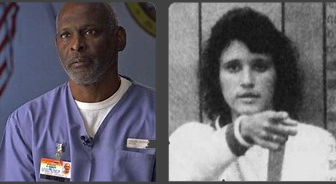
A cop recently used a computer to find a person whose face looked similar to a crime perpetrator captured on video. And then asked an eyewitness if the person he found looked like the suspect. Of course the eyewitness said “yes”. Because the computer already searched from millions of people to find someone who looked similar (which the cop then hid from the warrant judge).
Since police can easily get a witness to say they recognize a suspect, the misidentification usually comes before police put the suspect’s face in front of the witness. I have argued elsewhere that the process which identified Crosley Green was more “organic”, coming from actual witnesses who knew Crosley, rather than from police picking random people and getting an eyewitness to say “yes”
Assuming police can always get the eyewitness to say “yes”, I asked Google Gemini for some examples of how the actual misidentification takes place, before the eyewitness trick legitimizes the error.
Google Gemini on the Actual Moment of Misidentification
Before an eyewitness can misidentify an innocent person in a police lineup, investigators must first place that person into the lineup. In cases where DNA has later exonerated the convicted person, the methods police initially used to generate these suspects reveal how mundane assumptions, tips, or physical proximity can trigger a chain reaction leading to a wrongful conviction.
Bizarre Deductive Leaps
Sometimes, a suspect is generated entirely from an officer’s personal assumptions. In 1982, a woman was assaulted in Virginia by a Black man who mentioned during the attack that he “had a white girl”. A local police officer immediately singled out Marvin Anderson — not because of physical evidence, but because Anderson was the only Black man the officer personally knew who lived with a white woman. Police obtained a color photo from Anderson’s employer, placed it in an array alongside standard black-and-white mugshots, and the victim identified him. Anderson spent 15 years in prison before DNA proved his innocence.
Public Tips from Composite Sketches
When police release composite sketches to the media, they frequently receive a deluge of tips from citizens relying on vague resemblances. In Maryland, an anonymous caller told police that a local waterman named Kirk Bloodsworth looked like a composite sketch shown on television. Police placed his photo in an array, and witnesses identified him. Bloodsworth became the first person sentenced to death in the United States to be exonerated by post-conviction DNA testing.
The “Usual Suspects” and Mugshot Books
If police lack a suspect, they often look at local individuals with prior criminal records who roughly match the victim’s description. In the famous case of Ronald Cotton, police received a tip that Cotton resembled a composite sketch, and because he had previous run-ins with the law, they placed him in a photo array. The victim struggled but eventually selected him. Cotton was the only person from the photo array repeated in the subsequent physical lineup, solidifying the victim’s false memory. DNA exonerated him 10.5 years later.
Proximity and “Show-Ups”
Often, police canvas the immediate area of a crime and detain someone who fits a generic demographic description. Instead of using a lineup, officers conduct a “show-up,” bringing the handcuffed individual back to the victim — frequently illuminated by squad car spotlights — and asking, “Is this him?”. This highly suggestive environment implies police believe they have caught the culprit, prompting victims to confirm the identification despite the initial suspect being grabbed simply for walking down the wrong street.
Leave a Reply